Dynamic Hybrid Lunar Logistics Optimization
MCM 2026 · Problem B · Team 2630693
How should a 100,000-person lunar colony receive 100 million metric tons of construction material? Our model compares a space elevator, reusable ground rockets, and a dynamic hybrid strategy that changes as lunar resource production matures.
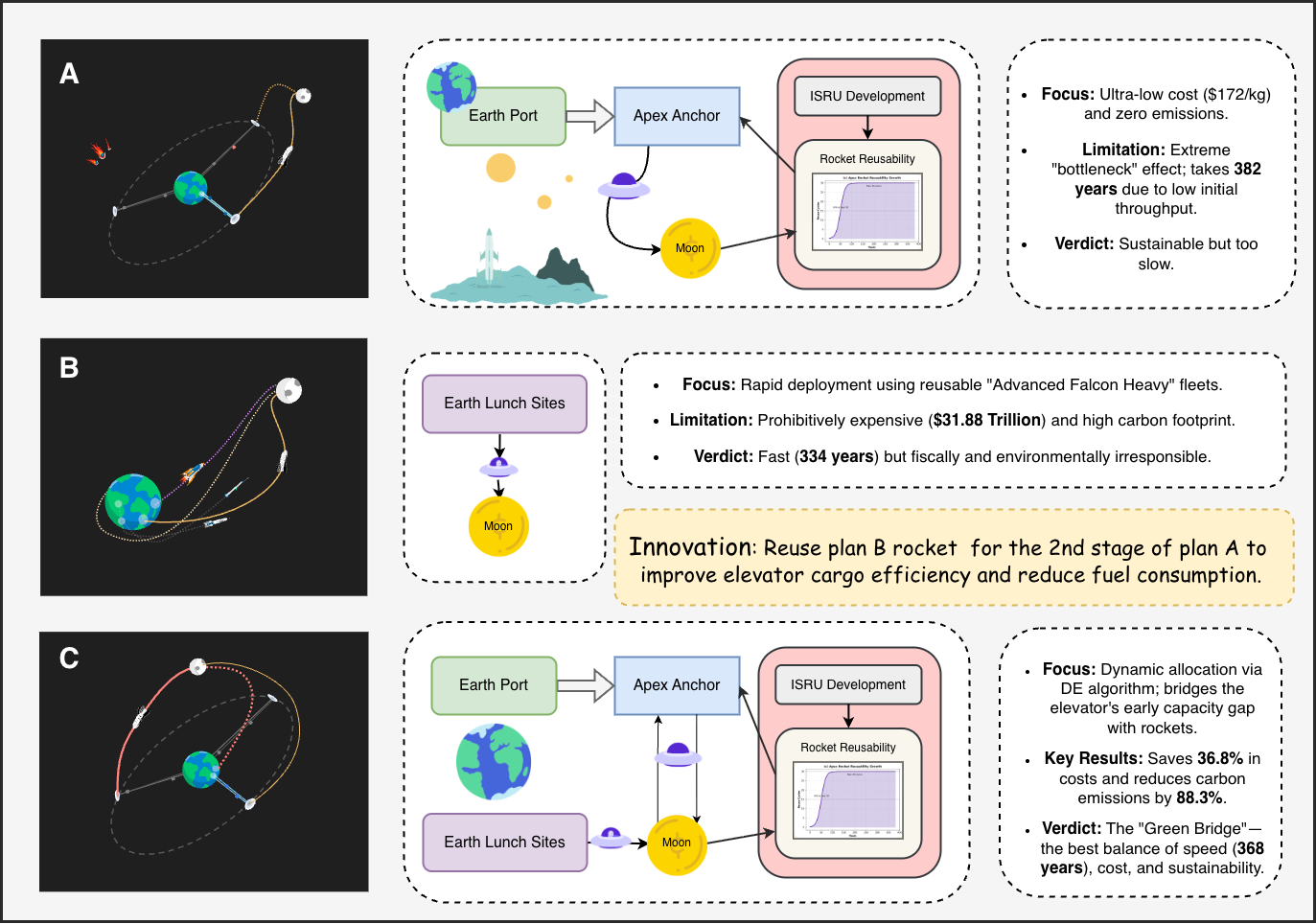
The modeling idea
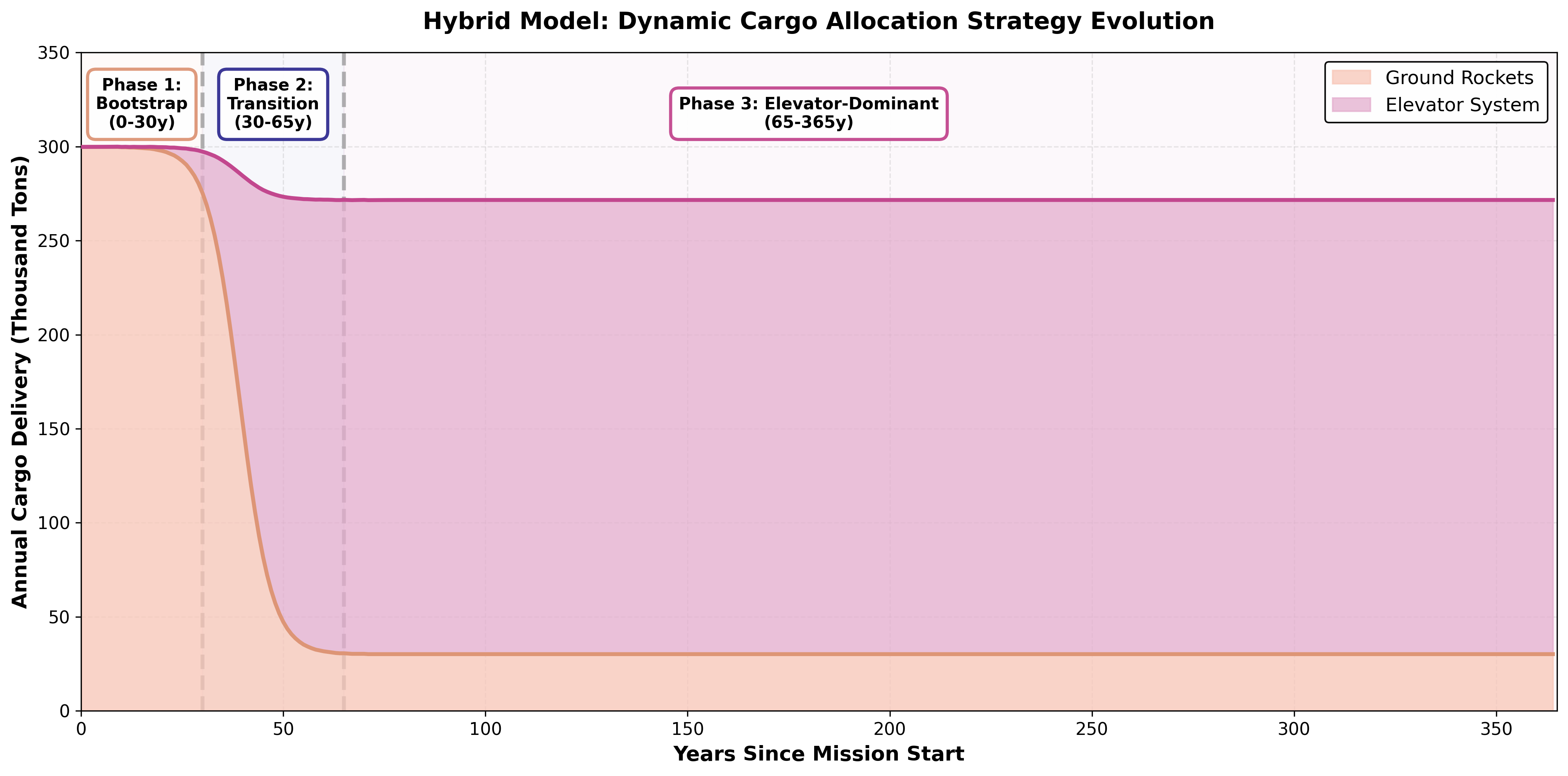
The elevator is inexpensive per kilogram but initially bottlenecked by immature In-Situ Resource Utilization (ISRU). Ground rockets deliver cargo sooner and can later join the apex fleet, but relying on them throughout the mission is costly and carbon intensive. We therefore let the allocation between both systems evolve over time.
Optimization and robustness
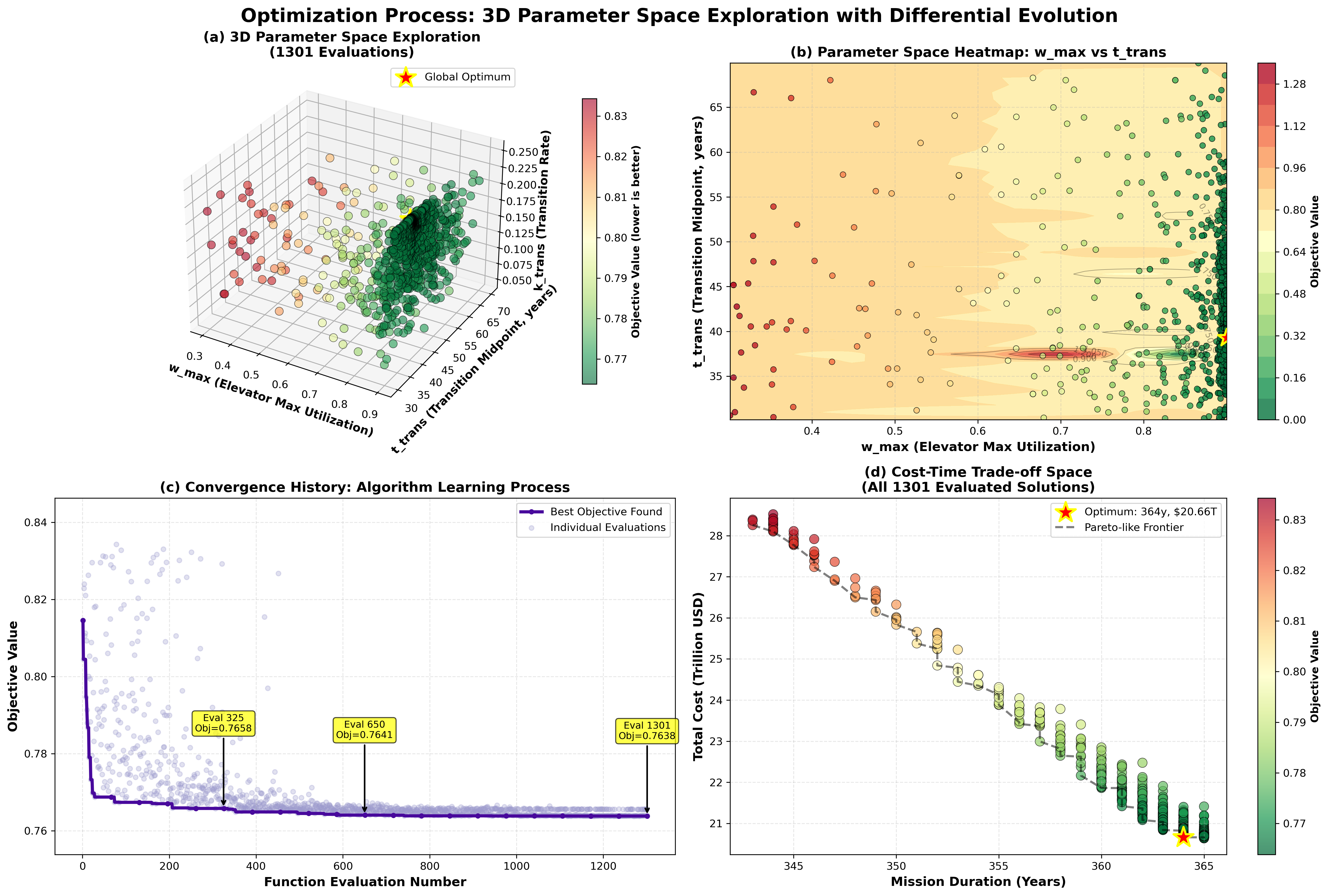
I led the mathematical modeling and programming. The final workflow combined nonlinear simulation, Differential Evolution, a 5,000-run Monte Carlo reliability study, and sensitivity analysis. The optimized hybrid policy shifts through rocket-dominant, transition, and elevator-dominant phases as ISRU matures.
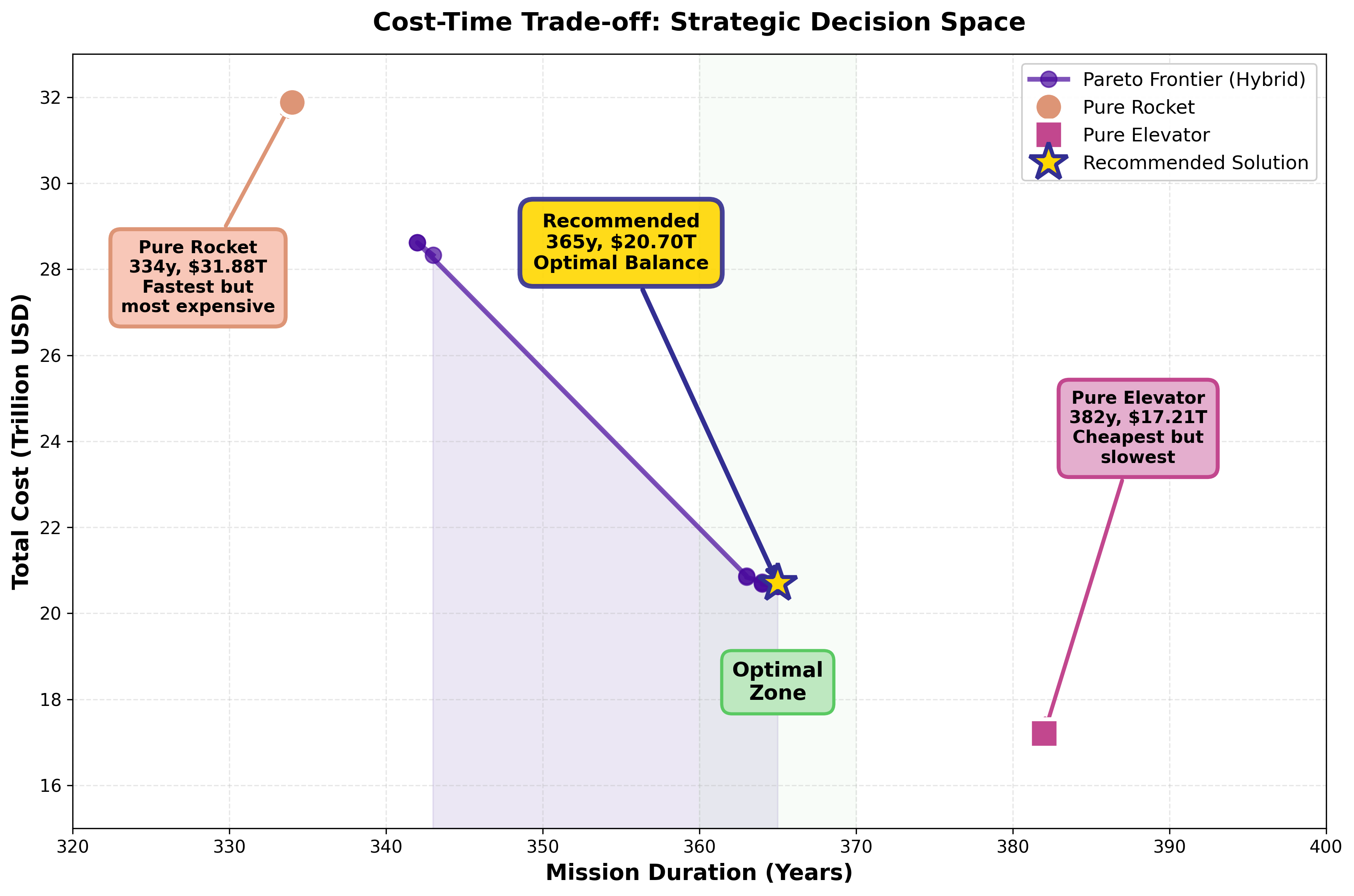
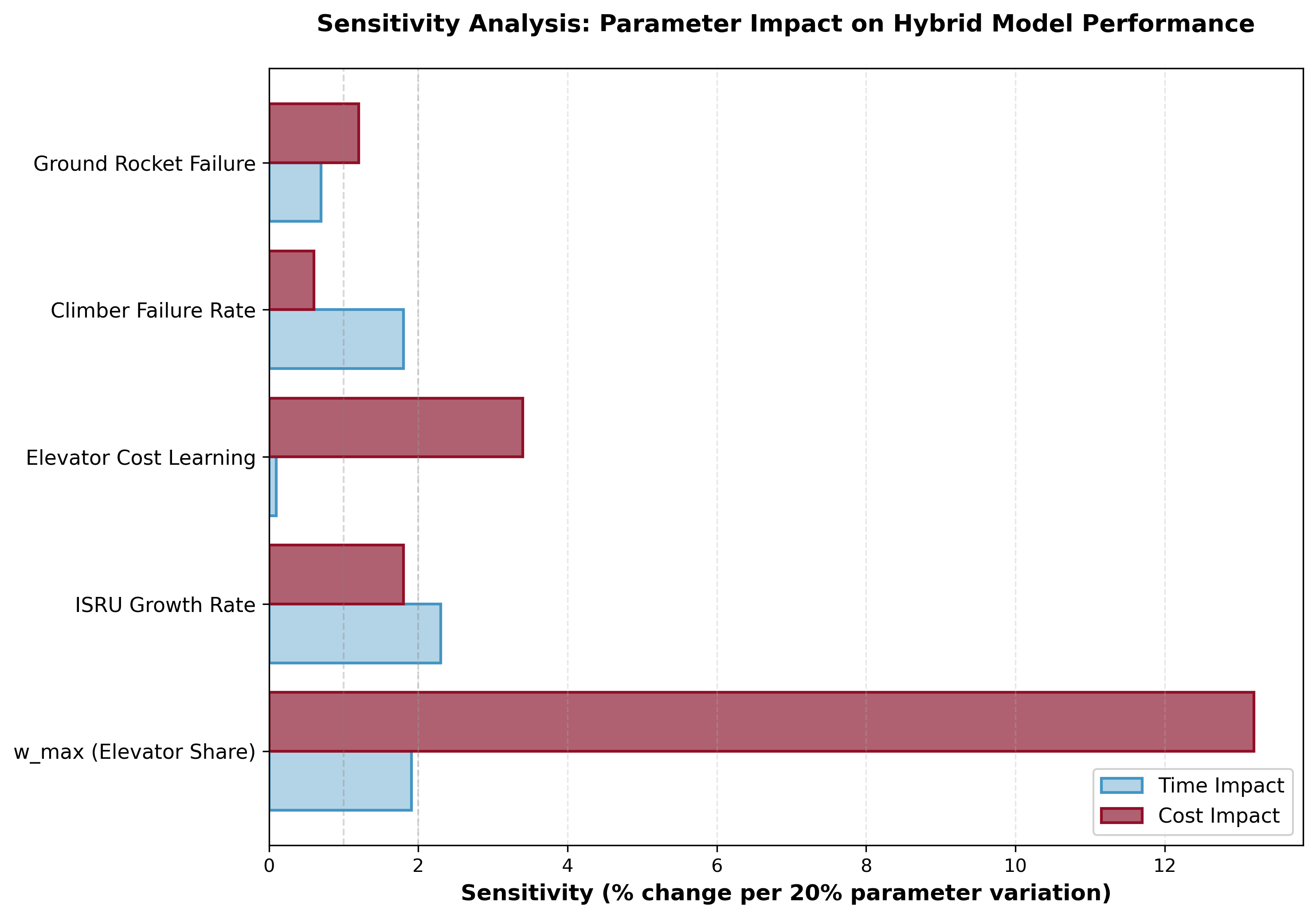
The hybrid plan saves about $12 trillion relative to a rockets-only strategy and shows only 3.2% time and 2.1% cost degradation under modeled failures. The submission received the MCM Finalist Award, placing in the top 1%.